Halodoc Is Quietly Changing How Indonesia Experiences Healthcare
 by
by 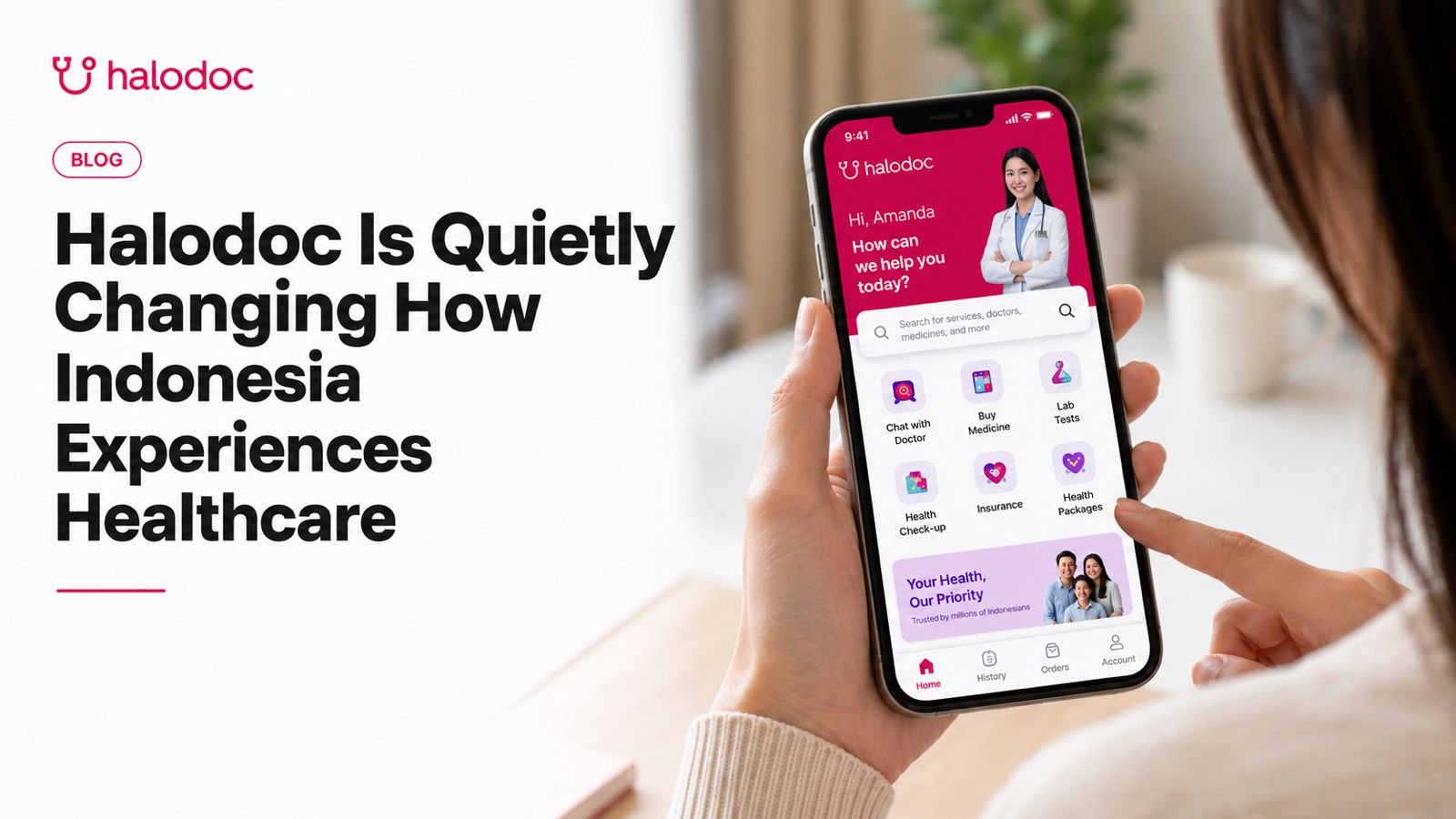
A patient wakes up at 2:13 AM with chest pain. Not severe enough to rush blindly to the emergency room. Not mild enough to ignore.
So they do what millions of people now do instinctively. They reach for their phone.
And in that moment, the healthcare system is no longer being judged by doctors, hospitals, or infrastructure. It is being judged by one thing that how fast it responds.
Because modern healthcare anxiety is not created only by illness. It is created by uncertainty. The waiting. The confusion. The silence between a symptom and an answer. And this is the part of healthcare most systems were never designed for. For years, the conversation around healthcare innovation focused on infrastructure expansion, medical access, and digital records. But while everyone was trying to modernize hospitals, another problem quietly became impossible to ignore:
People no longer wanted healthcare that was available.
They wanted healthcare that was immediately responsive.
That shift changed everything. And in Indonesia, one company recognized it earlier than most. Halodoc didn’t just implement Conversational AI to improve support. It used it to redesign how healthcare conversations happen entirely. What emerged wasn’t simply better communication. It was a new kind of Conversational Experience where answers became faster, friction became smaller, and healthcare became more emotionally accessible at scale.
That’s the real transformation happening inside Indonesia’s healthcare ecosystem right now. And most people still haven’t fully noticed it.
Did Healthcare Systems Misunderstand the Real Problem All Along?
For years, the development of healthcare organizations could be measured in the amount of physical growth experienced. More hospitals, clinics, doctors, and infrastructure. But the digital evolution outpaced healthcare systems’ ability to adjust. Today, patients do not process healthcare experience through its processes but rather through individual instances.
A symptom arises. A worry builds. A question is born. And the expectation is instant understanding.
It is for this reason that speed has quietly become one of the most influential factors in today’s healthcare success. Since an emotionally charged environment breeds psychological friction, which quickly alters behavior patterns in ways systems do not recognize.
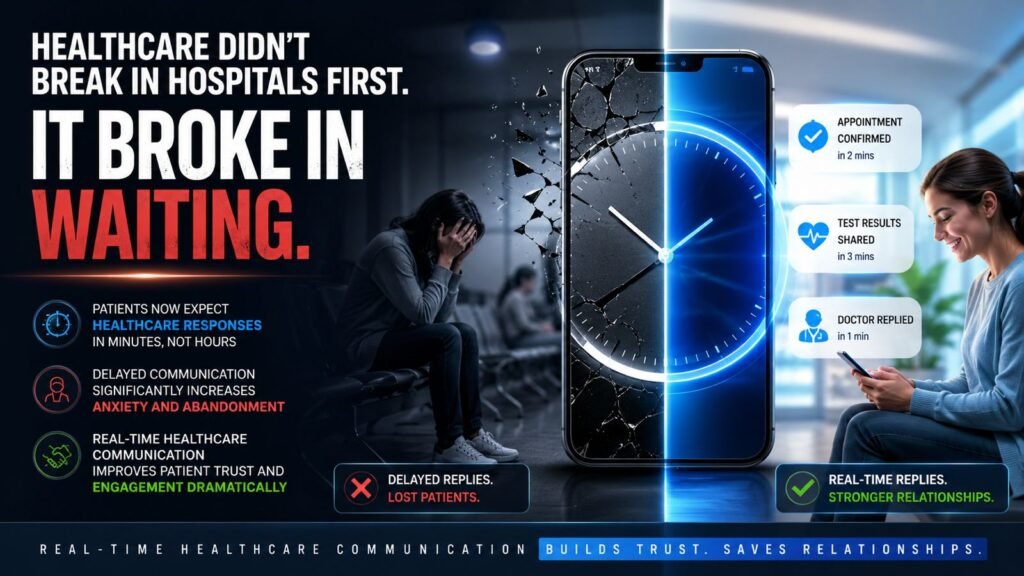
A delay not only slows down communication. It breeds anxiety. It leads to abandonment. It creates hesitation. And this is precisely why Conversational AI in Healthcare is seeing such exponential adoption in Asia. Not as a result of business enthusiasm toward automation, but because patients have transformed their expectations of the start of their experience.
The initial layer of healthcare is no longer treated. It’s conversation.
Halodoc Understood Something Most Healthcare Platforms Missed
Most healthcare platforms still treat conversations as a support layer attached to the real system. Halodoc took a different approach. They understood that communication is rapidly becoming the primary system. This insight changes the process of designing healthcare technology.
Instead of forcing users through fragmented journeys, delayed callbacks, and complex navigation flows, Halodoc created a healthcare environment where interaction feels immediate, contextual, and continuous. Patients don’t simply search anymore. They ask, clarify, refine, and move forward through real-time conversational flows powered by Conversational AI.
And this changes the emotional experience of healthcare completely.
Because healthcare decisions are rarely logical at first. They are emotional, uncertain, and time-sensitive. Users are often overwhelmed before they are informed. In those moments, the ability to deliver fast, intelligent, human-like interaction becomes incredibly powerful.
This is where AI-powered patient engagement becomes more than automation. It becomes reassurance at scale.
Why Waiting Became the Most Expensive Problem in Healthcare
Most sectors miss out on conversions due to the waiting time. Healthcare misses out on trust. This difference is more critical than many organizations recognize. Studies have proven repeatedly that today’s consumers require responses within minutes, if not seconds, especially during high-emotion decision moments. In healthcare, waiting times increase doubt. And doubt leads to swift behavioral changes.
Users become unsure about their symptoms. They delay their decisions. They seek answers from other sources. Or worse, they disengage altogether. This is where Real-Time Healthcare Communication becomes critical.
Not because speed looks impressive, but because responsiveness directly shapes healthcare outcomes. Fast interaction creates confidence. Confidence drives action. Action accelerates care.
And in an environment where millions of healthcare communications are occurring at the same time, such as a highly digital nation like Indonesia, it is impossible to sustain that amount of responsiveness manually. That is why Healthcare Communication Automation is not something of the future anymore. It is becoming a basic foundation.
The Most Important Shift Isn’t Technological, It’s Behavioral
This is where most companies fail to understand. The rise of Conversational AI is not primarily because of technological reasons. It is a behavioral shift.
People no longer see themselves adjusting to systems. On the contrary, people expect systems to adjust to them. This makes all the difference when designing digital healthcare experiences.Traditional healthcare interfaces required users to:
- Search manually
- Interpret information
- Navigate complexity
- Wait for clarification
With conversational systems, all of this is turned on its head. A conversational experience involves the system understanding intent while actively guiding patients to their destination. This is the reason the modern conversational experience differs so much from conventional healthcare experiences.
It alleviates cognitive load in highly stressful times. And in healthcare, lowering the emotional cost might prove just as essential as lowering other costs.
Indonesia Became the Perfect Environment for This Transformation
This evolution was driven much faster than expected by Indonesia’s digital ecosystem. The combination of an ever-increasing mobile-first demographic, increasing levels of digital service acceptance, and higher expectations for healthcare provision offered the perfect environment for Conversational AI in Healthcare to take root. However, there’s one more factor that made this transformation so impactful.
It has never been easy to physically scale healthcare access for large populations spread out geographically. But conversational scalability works differently. Hospitals have to be in a physical place. A conversation can be anywhere. It redefines the entire economic proposition for scalable healthcare access.
And this is precisely what Halodoc has done so well not only in Indonesia, but also in the context of global healthcare evolution. And the impact of this evolution goes far beyond digital healthcare innovation. This evolution marks the redesign of how healthcare journeys begin.
The Companies Winning Healthcare Will Not Be the Ones With the Biggest Systems
They are the ones who will have the quickest clarity. This is the new paradigm being played out right now. The leaders of the healthcare industry are coming to understand that contemporary consumers feel about healthcare systems emotionally before they analyze them clinically. They react to response times before infrastructure investments. Clarity before complexity.
This is why discussions about Conversational AI, scaling Conversational Experience, and intelligent healthcare systems are becoming key themes at the Conversational AI & Customer Experience Summit Indonesia.
Because the future of healthcare is not simply about digitizing systems. It is about designing systems that respond intelligently and continuously in real-time. The organizations figuring this out first are not just enhancing healthcare experiences. They are redefining expectations for healthcare systems completely.
Final Insight: The Future of Healthcare Will Respond Before It Treats
The biggest healthcare platforms of the future may not look very different on the surface.
Patients will still seek advice.
Doctors will still provide care.
Hospitals will still exist.
But underneath, something fundamental is changing. The speed of conversation is becoming as important as the quality of treatment itself. Because in moments of uncertainty, users do not search for systems. They search for reassurance.
And the platforms capable of delivering that reassurance first through intelligent Conversational AI, scalable Healthcare Communication Automation, and emotionally aware Conversational Experience will define the next generation of healthcare leadership.
Halodoc understood that shift early. Most companies still haven’t. And by the time it becomes obvious, the leaders will already be too far ahead. If you want to understand where this transformation is heading before the gap becomes impossible to close, this is exactly why industry leaders are securing their place at the Conversational AI & Customer Experience Summit Indonesia and buying CACES tickets before everyone else catches up.
FAQ's
How Is Conversational AI Quietly Reshaping Healthcare in Indonesia?
Healthcare in Indonesia is no longer evolving only through hospitals or mobile apps. The real shift is happening through faster, smarter conversations powered by Conversational AI. Platforms like Halodoc are using AI-driven communication systems to help patients receive quicker answers, instant guidance, and a smoother Conversational Experience during moments that often feel stressful or uncertain. Instead of waiting endlessly for support, users can now interact in real time, making healthcare feel more accessible, responsive, and human.
Why Are Healthcare Companies Investing So Heavily in Conversational AI?
Because patient expectations changed faster than traditional healthcare systems could keep up. People no longer want delayed responses, complicated processes, or fragmented communication. They want clarity instantly. That’s why Conversational AI in Healthcare is becoming essential. It helps healthcare platforms respond faster, reduce communication gaps, and create more connected patient experiences without overwhelming human teams.
How Does Halodoc Use Conversational AI to Improve Patient Experience?
Halodoc uses Conversational AI to simplify the way patients access healthcare support. Instead of forcing users through confusing workflows or long waiting times, the platform enables faster, more natural interactions that guide users toward answers in real time. This creates a more seamless Conversational Experience, where patients feel supported from the very first interaction instead of being left waiting during critical moments.
What Makes Conversational Experience So Important in Digital Healthcare?
Healthcare decisions are emotional. People often seek help when they are anxious, confused, or uncertain. A strong Conversational Experience reduces that emotional friction by making communication feel immediate, simple, and human. Instead of searching endlessly through information, users can ask questions naturally and receive context-aware responses powered by Conversational AI.
Why Is Real-Time Healthcare Communication Becoming Critical Today?
In healthcare, delays don’t just slow processes, they increase anxiety. That’s why Real-Time Healthcare Communication has become one of the most important priorities for digital healthcare platforms. Patients now expect immediate responses during sensitive situations, and businesses that fail to deliver fast communication risk losing trust before treatment even begins.
How Does Healthcare Communication Automation Improve Patient Support?
Healthcare Communication Automation helps healthcare providers manage large volumes of patient interactions without creating delays or communication gaps. From appointment guidance to follow-up support, automation ensures patients receive timely responses consistently. More importantly, it allows healthcare teams to focus on critical cases while conversational systems handle repetitive communication more efficiently.
What Is AI-Powered Patient Engagement and Why Does It Matter?
AI-powered patient engagement uses intelligent conversational systems to create more personalized and responsive healthcare interactions. Instead of generic communication, patients receive guidance based on context, urgency, and intent. This not only improves trust but also helps patients move through healthcare journeys with greater confidence and less confusion.
Why Is Conversational AI Growing Faster in Healthcare Than Expected?
The healthcare industry operates in high-stress, time-sensitive environments where communication directly impacts patient behavior. That’s why Conversational AI in Healthcare is scaling rapidly. Patients don’t want to wait for answers anymore, and healthcare providers are realizing that responsiveness is becoming just as important as accessibility.
Why Are Industry Leaders Discussing Conversational AI at the Conversational AI & Customer Experience Summit Indonesia?
The Conversational AI & Customer Experience Summit Indonesia is becoming an important space for leaders exploring how intelligent communication systems are transforming industries like healthcare. Businesses are no longer discussing AI as a future concept, they are analyzing how conversational systems are already improving patient engagement, communication speed, and digital healthcare experiences at scale.
What Does the Future of Conversational AI in Healthcare Look Like?
The future of Conversational AI in healthcare will focus on faster responsiveness, emotionally aware communication, and highly personalized patient journeys. As healthcare becomes increasingly digital, conversational systems will move beyond basic automation and become a core part of how patients access support, make decisions, and experience care itself.