Automation Isn’t Enough Anymore – Key Insights from CACES Malaysia That Change Everything
 by
by 
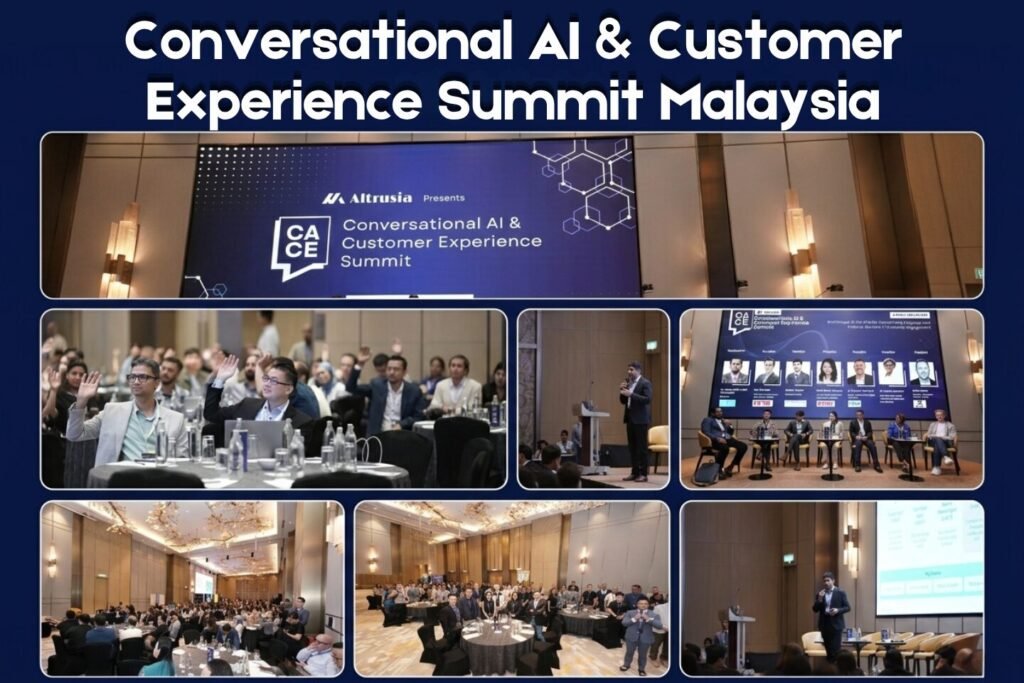
With over 250 delegates attending the event, more than 30 speakers, the conversational ai & customer experience summit Malaysia created a forum for great insights and true conversations. The event was not a showcase of tools used to implement conversational AI, instead it was about understanding how conversational AI can deliver measurable outcomes.
As discussions continued throughout the day, the discussion shifted from “How do I implement conversational AI?” to “How do I make conversational AI better?” Leaders discussed why there are so many conversational AI deployments that do not produce results even though they utilize cutting-edge technology.
One major takeaway from this summit was that when conversational AI aligns with a business challenge, an effective & scalable conversational experience will lead to real business impact
Why Trust Defines the Future of AI in Customer Engagement
Mohd Azlan Masood’s keynote at the Conversational AI & Customer Experience Summit Malaysia, highlighted how building trust with customers forms the basis of successful adoption of Artificial Intelligence (AI). In specific industries, such as Financial Services, the use of AI in customer interactions will depend on whether it is transparent, dependable, and it has been used in an ethical manner.
Trust is also important because without it, even the best advanced conversational AI systems can fail to create meaningful relationships with customers. Customers expect that companies will be open, accountable for their interactions and that they will use data responsibly.
When businesses combine trust with their intelligent systems, they can use this combination to create higher-quality, more reliable conversational experiences, leading to higher levels of engagement and ultimately longer-term loyalty.
The 90% Failure Problem in Conversational AI
Dario Bianchi provided the greatest insight from the Conversational AI & Customer Experience Summit Malaysia when he stated, “The reason most conversational AI projects do not succeed at scale is that companies tend to measure their success only in terms of efficiency (i.e., cost reduction) and do not increase the overall experience of the interaction. This has resulted in systems that deliver rapid responses, but provide little conversational depth or personalization, and do not provide real value to the consumer.”
On the other hand, successful companies use trends related to conversational AI to generate revenue, increase retention rates and create lasting relationships with their customers through the use of AI as a competitive advantage rather than merely providing operational assistance for employees.
The Best Customer Interaction? The One That Never Happens
A key insight shared at the conversational ai & customer experience summit malaysia was that many customer interactions are unnecessary and caused by broken processes.
Instead of scaling conversations, businesses should focus on reducing them. This redefines customer experience automation from a reactive approach to a proactive strategy.
By fixing inefficiencies and anticipating customer needs, companies can create smoother journeys and a more effective conversational experience that truly adds value.
AI Must Move Beyond Assistance to Action
Another important discussion at the Conversational AI & Customer Experience Summit Malaysia highlighted that conversational ai must evolve from assisting users to actively driving outcomes.
When AI is deeply integrated into workflows, it can make decisions, automate actions, and deliver real business value. This shift is critical for the future of ai in customer engagement, where speed alone is not enough.
Organizations that adopt this approach are able to build more intelligent systems that go beyond basic automation.
Conversational AI Trends in ASEAN: Context Over Language
The Conversational AI & Customer Experience Summit Malaysia also explored how conversational ai trends are evolving across ASEAN markets.
While multilingual capabilities are important, understanding context is even more critical. Cultural nuances and local expectations play a major role in shaping the conversational experience.
Businesses that succeed are those that design AI systems capable of adapting to different markets while maintaining consistency and accuracy.
From Automation to Intelligence in Customer Experience Automation
A major theme across the Conversational AI & Customer Experience Summit Malaysia was the shift in customer experience automation.
Organizations are moving beyond rule-based systems toward intelligent AI ecosystems. These systems leverage real-time data and predictive capabilities to enhance conversational ai performance.
This evolution enables businesses to deliver a more personalized and seamless conversational experience, setting a new standard for customer engagement.
Conclusion: Intelligence Drives Real Impact
The most important takeaway from the Conversational AI & Customer Experience Summit Malaysia is simple:
AI brings clarity. Strong systems create results.
Organizations that rely only on automation will struggle to scale. But those that embrace intelligence and align it with business goals will unlock the true value of conversational ai.
Automation improves speed.
But intelligence transforms outcomes.
And in today’s competitive landscape, outcomes are what truly matter.
FAQ's
Why is conversational AI still failing despite all investments made in 2026?
Despite significant investments, conversational AI technology fails due to its poor application. Most companies are focused on building automated processes that provide quick and low-cost solutions without adding any value. As shown during the Conversational AI & Customer Experience Summit Malaysia, such approaches will never generate any benefits and fail to be implemented successfully.
What constitutes a strong conversational experience in 2026?
In the modern world, conversational experiences are much more than simply answering users’ questions. Powerful AI-driven systems combine multiple aspects to create engaging interactions that are proactive and personalized. Advanced conversational AI uses real-time data and behavioral insights to deliver unique and relevant experiences to customers.
What does the Conversational AI & Customer Experience Summit Malaysia highlight that most companies miss?
One of the main topics discussed during the Conversational AI & Customer Experience Summit Malaysia is that implementing AI technologies is pointless unless there are clear business goals behind it. Companies that can connect AI to specific problems and demonstrate its ability to achieve certain outcomes like increased sales and improved retention will enjoy real success.
Why do many organizations fail to scale their conversational AI strategy?
Many companies fail to implement their conversational AI strategies at scale because of their approach to evaluating progress. Instead of tracking performance indicators like customer experience and satisfaction, they look at how effective new technologies are in saving money. Without context-aware and value-driven solutions, businesses won’t be able to make AI work.
How does conversational AI affect customer experience?
With the help of conversational AI, it becomes possible to remove friction from the customer journey and enable users to get answers instantly. Hyper-personalized interactions and proactive problem-solving become part of daily routine, making businesses move away from passive support towards proactive customer experience management.
Why is "context over language" the biggest trend in conversational AI in 2026?
Multilingual support remains an essential requirement for any conversational AI system, but it doesn’t bring additional value. The ability to understand the context of users’ requests and predict their needs is crucial in creating a powerful conversational experience. In markets like ASEAN, context-awareness is even more important than language support.
Why is trust the key ingredient in conversational AI implementation?
For a conversational AI strategy to be successful, businesses have to consider users’ expectations and establish trust. Conversational agents should act reliably and ethically to avoid alienating customers. In industries like finance and healthcare, where confidentiality and reliability are crucial, trust is even more important.
Is it better to reduce customer interactions or increase them?
According to the information shared during the Conversational AI & Customer Experience Summit Malaysia, the best way to increase engagement is by reducing customer interactions. The fewer conversations are necessary, the more convenient the customer experience will be. However, this approach requires fixing broken processes beforehand.
How does conversational AI move from saving costs to generating revenue?
When used correctly, conversational AI can be transformed into a powerful tool for boosting revenues. By offering personalized recommendations and guiding users through complex decisions, businesses can generate additional sales. In addition, the technology helps to improve customer engagement, which positively affects their lifetime value and loyalty.
What are the key trends shaping customer experience with conversational AI?
The most popular trends in conversational AI are proactive support systems, context-aware interactions, personalized suggestions, and AI-based decision-making. Businesses are increasingly focused on developing their AI ecosystems to cover all stages of the customer journey and facilitate smooth interactions.
How should businesses design a conversational experience that converts users?
If you want to make your conversations engaging and valuable, then you should concentrate on user intent and eliminate all possible sources of friction. Context-driven interactions that guide users to a specific outcome will become even more powerful in the future.
What makes high-performing conversational AI systems stand out?
Advanced conversational AI systems use deep learning algorithms and natural language processing models to provide personalized and insightful interactions. Instead of following a pre-defined scenario, they adapt to changes and learn from previous interactions. Average AI-powered chatbots are based on fixed rules that rarely work.
How does conversational AI change in ASEAN markets?
In markets like ASEAN, conversational AI is shifting towards contextual and culturally-aware solutions. By delivering personalized experiences locally, businesses can attract more customers and keep them engaged.