What Started in Malaysia Is Scaling in Singapore, And Most Haven’t Noticed Yet
 by
by 
Most companies think they’re “adopting” Conversational AI.
What are they actually doing?
Pilots. Experiments. Demos.
Meanwhile, in Kuala Lumpur, something very different happened. Leaders didn’t talk about AI, they exposed why most companies are getting it completely wrong. And that’s exactly why Singapore is about to become the turning point.
Malaysia Didn’t Talk About AI, It Diagnosed Why It Fails
At the Conversational AI & Customer Experience Summit Malaysia, the agenda revealed a deeper truth: the focus wasn’t just innovation, but understanding why most conversational AI initiatives fail to deliver real business impact. According to the sessions and keynotes , one insight cut through everything:
“90% of conversational AI projects fail at scale, not because of tech, but because of wrong intent.”
Dario Bianchi (Mindvalley) - The Real Problem Isn’t AI
Dario Bianchi made one thing brutally clear, most companies are playing the wrong game with conversational ai. They focus on cutting costs, reducing support tickets, and chasing automation metrics that look good on dashboards but don’t drive real growth. It feels efficient, but it’s short-sighted.
But the top 10%?
They optimize for:
- Revenue growth
- Retention
- Customer lifetime value
And that shift changes everything. Because the moment your conversational experience is tied to business outcomes, not just efficiency, AI stops being a support tool and becomes a growth engine. If your AI isn’t driving revenue, it’s not scaling, it’s stalling.
Mohd Azlan Masood (PNB) - Trust Is the Missing Layer
In financial services, he pointed out something most companies completely overlook, AI without trust can actually do more harm than good. The real challenge isn’t building smarter systems. It’s building a conversational experience people can trust. That means:
- Creating responsible and ethical AI frameworks
- Using AI to support humans, not replace them
- Being transparent in how decisions are made
Because at the end of the day, customers don’t just interact with technology, they judge it. And here’s the shift most haven’t realized yet:
The future of ai in customer engagement isn’t just automation. It’s trust at scale.
Eythan Goh (Zendesk) - Most CX Work Is Waste
A significant portion of customer service interactions are not truly valuable, they are often the result of broken processes, unclear communication, or gaps in the customer journey. These conversations shouldn’t exist in the first place. However, many companies misunderstand the role of AI in customer experience automation. They focus on increasing speed, handling more queries, reducing response time, and improving efficiency metrics.
But speed alone doesn’t solve the real problem.
Conversational AI’s true purpose is not just to respond faster, but to identify and eliminate the root causes of these interactions. It should help businesses:
- Detect friction points across the customer journey
- Reduce repetitive and low-value queries
- Proactively resolve issues before customers even reach out
The objective is not to scale the volume of conversations, but to improve their quality and relevance. Because when unnecessary interactions are removed, the remaining conversations become more meaningful, driving stronger relationships, higher satisfaction, and long-term customer value.
Panel Insight - ASEAN’s Hidden Complexity
The multilingual AI panel revealed a hidden problem most companies underestimate.
Scaling conversational ai trends across ASEAN isn’t just about better technology, it’s about understanding people. At first glance, it seems easy: translate the language, plug in AI, and expand into new markets. But that approach fails fast. Because:
- The same words can mean different things in different cultures
- Customer intent changes based on local behavior and expectations
- Tone, context, and communication styles vary from country to country
So even if your AI works perfectly in one market, it can completely misfire in another. And this is where most businesses get stuck.
They focus on language…
But ignore meaning.
They focus on scale…
But ignore context.
To truly scale conversational ai, personalization must go deeper, it has to adapt to regional nuances, cultural signals, and local expectations. The real insight?
AI doesn’t fail because of technology. It fails because it doesn’t understand context. And if your AI can’t understand your customer in their environment, scaling it across markets isn’t growth, it’s a costly mistake.
Singapore Is Where Theory Gets Stress-Tested at Scale
The Conversational AI & Customer Experience Summit Singapore isn’t just the next chapter, it’s a level up. This is where things get serious. Because the conversation is no longer about “What is AI?” or “Should we use it?” Now the real questions are:
- Can your conversational AI actually handle enterprise-level complexity?
- Is your conversational experience generating real, measurable ROI or just activity?
- Can your systems scale smoothly across different markets, languages, and customer touchpoints?
This is the shift most companies aren’t ready for. The conversational ai & customer experience summit singapore is where:
- AI moves from small experiments to full-scale deployment
- Strategy is tested against real-world infrastructure
- And ideas are no longer impressive unless they deliver results
Because at this stage, it’s not about having AI. It’s about proving it works at scale.
Why Attending Singapore Is a Strategic Advantage
Let’s be direct.
If you skipped Malaysia, you missed the warning. If you skip Singapore, you miss the opportunity.
At the conversational ai & customer experience summit singapore, you will learn:
- How top companies are scaling customer experience automation without breaking systems
- How to align conversational ai trends with business outcomes
- How to design ai in customer engagement that actually converts, not just responds
Leaders from companies like Google, DHL, Zurich, BT Group, and Prudential are not talking about possibilities, they’re sharing what’s already working.
Sessions like:
“Conversational AI 2.0: The Rise of Generative Agents”
“AI-Driven Customer Insights: Turning Data into Strategy”
“Building Trustworthy AI: Governance, Ethics & Compliance”
…are designed to answer one thing:
“How to avoid becoming part of the “90% failure” statistic.”
The Shift Is Already Happening, Just Quietly
This is the part most people completely miss. In conversational ai, winning isn’t about being the first to adopt, it’s about being the first to scale it the right way. Many companies rush to implement AI early, but without the right strategy, systems, and alignment, they hit a wall. That’s exactly what Malaysia revealed.It exposed the gaps, where AI breaks, where strategies fail, and where businesses struggle to move beyond pilots.
Now comes Singapore. This is where those lessons turn into action. The companies that identify those gaps and fix them, by aligning AI with real business outcomes, building scalable systems, and focusing on impact are the ones who will pull ahead.
Because in this phase, speed doesn’t win. Execution does.
Final Thought: This Isn’t About AI, It’s About Timing
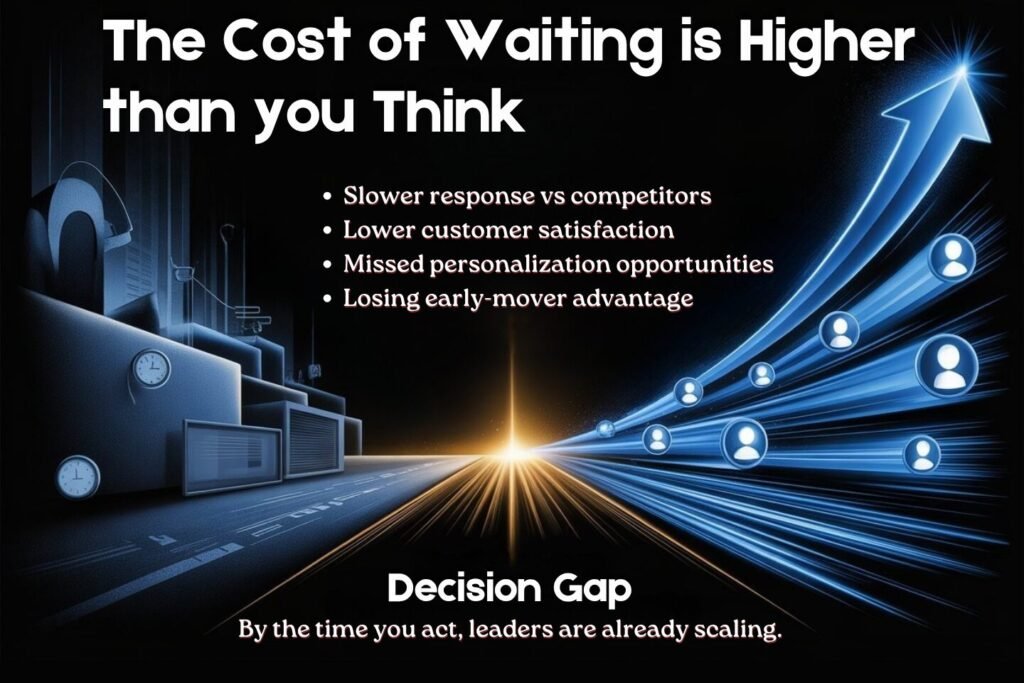
Every market goes through a defining moment, a point where the gap between leaders and followers becomes impossible to close. At that stage, early adopters take a commanding lead while late adopters are left struggling to catch up. That moment is happening right now in conversational experience. And the Conversational AI & Customer Experience Summit Singapore is where this gap will become even more visible. This is the point where leaders scale what’s already working, while others finally realise how far behind they actually are.
So the choice is simple:
- You can sit back and watch the shift happen
- Or you can step in early and lead it
But one thing is certain: you can’t afford to ignore it, because the market won’t wait.
FAQ's
What critical insight did speakers reveal about conversational AI adoption?
Technology is not the barrier for successful implementation; instead, mindset and strategy matter. Companies that align conversational ai with their goals such as retention and growth have better performance than automation-focused organizations.
Is conversational AI generating a positive return on investment for businesses?
Conversational AI generates ROI for businesses that use it to personalize, up-sell, and communicate proactively. In turn, customers generate higher lifetime value while staying loyal to the brand.
What is the most common mistake made when automating customer experiences?
The most common mistake is automating ineffective processes and workflows instead of optimizing them. As a result, there’s no positive conversational experience, and users are not satisfied with the product.
How is conversational AI changing customer experience by 2026?
Conversational AI will evolve from reacting to requests into anticipating user needs. The application of advanced analytics and AI will help deliver a hyper-personalised conversational experience to users.
What makes conversational experience a competitive advantage in 2026?
Today’s customer expects quick and context-aware responses via messaging platforms. Hence, brands that automate such interaction are more trusted, engaged with customers, and have higher rates of loyalty compared to others.
What distinguishes the conversational ai & customer experience summit singapore from similar events?
This summit focuses on practical solutions and approaches to implementation rather than theory. The participants will learn proven strategies and frameworks for enterprise-level conversational ai deployment.
How can businesses scale conversational AI in ASEAN regions?
To ensure scalable implementation of conversational ai, businesses must consider linguistic aspects and localization. Thus, the process requires an understanding of specific cultures and markets.
Why do experts call trust the key to ai in customer engagement?
For conversational AI to become helpful, it’s crucial to build trust between users and technology. Therefore, decision transparency and ethical practices should become the foundation for AI implementation.
What conversational AI trends are worth tracking in 2026?
Some of the main conversational AI trends include large language models, agentic AI, sentiment analysis, and AI orchestration. Such innovations revolutionize customer experience automation by making it more efficient.
How does conversational AI affect customer retention and loyalty?
The key benefit of ai in customer experience is higher interaction quality. By communicating fast and personally, businesses foster stronger connections with users who tend to stick to the brand longer.
Which industries are adopting conversational AI successfully today?
Those industries where customers interact intensively, including banking, telecom, e-commerce, and healthcare, benefit from ai significantly since the technology helps boost efficiency and customer experience automation.
Why doesn't conversational AI scale well in enterprises today?
The main reason why AI scales poorly relates to bad integration practices and poor AI literacy among employees. Consequently, conversational ai cannot move to mass deployment successfully.
What risks do companies run by ignoring conversational AI today?
The risks include losing competitive advantages associated with effective customer engagement. Those brands that fail to adopt AI in customer engagement will provide less efficient and slower service.