Why Conversational AI Works Differently in India, China, and Southeast Asia
 by
by 
Conversational AI is often discussed as if it behaves the same everywhere. In reality, it doesn’t. In Asia, particularly across India, China, and Southeast Asia, Conversational AI follows very different adoption patterns, user expectations, and design principles. Understanding these differences is critical for any organization building a scalable Conversational Experience in the region.
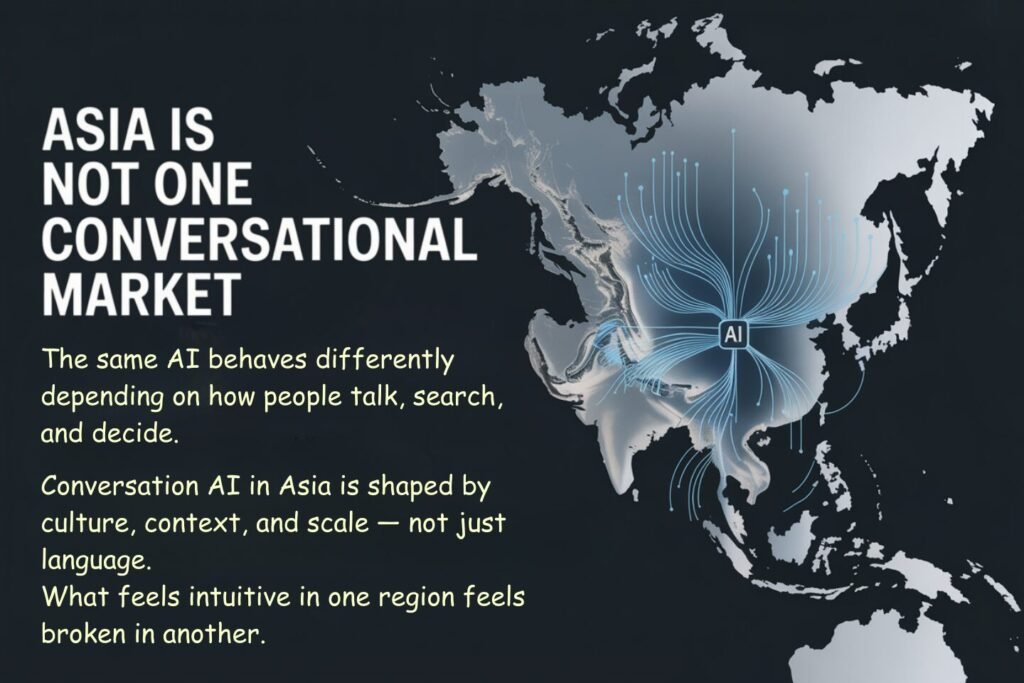
What works in one market can fail completely in another. The language diversity, digital habits, platform ecosystems, and trust models shape how every chatbot is perceived and used. And that is why conversational AI in Asia needs a localized, context-first approach rather than a one-size-fits-all strategy.
India: Voice-First, High-Volume Conversational AI
In India, the adoption of Conversational AI is driven by scale and accessibility. For the first time, millions of users interact with digital services through voice. Therefore, Conversational AI in India is heavily voice-led, multilingual, and designed for high-volume interactions.
One of the key characteristics that should feature in a successful Conversational Experience in India is simplicity. Users expect a Chatbot to understand regional languages, accents, and mixed language inputs. Most importantly, Conversational AI needs to work well in low-bandwidth environments and on basic smartphones. Trust is built through familiarity and responsiveness, not through sophistication.
This is why Indian Conversational AI systems usually focus on voice bots, missed-call triggers, and WhatsApp-based Chatbot interfaces. The goal is reach, not polish.
China: Ecosystem-Driven Conversational AI
The Conversational AI landscape of China is very different. It is shaped by tightly integrated digital ecosystems. Super apps are dominating daily life, and conversational AI has directly been embedded into e-commerce, payments, mobility, entertainment. In China, users expect a Conversational Experience that is proactive and deeply contextual. A Chatbot is not just a support tool. It is an operational layer that completes tasks, triggers actions, and integrates with multiple services instantly.
Trust in conversational AI is built by performance and utility. The users expect speed, intelligence in recommendations, and smooth execution. That is why Conversational AI in China feels more agent-like and less conversational in tone.
Southeast Asia: Mobile-First and Chat-Native
Southeast Asia sits between these two extremes. The region is mobile-first and heavily chat-native. Here is where Conversational AI wins for providing a helpful and human experience. A robust Conversational Experience is an equilibrium of automation and empathy. Chatbots should be designed to assist users with shopping, tracking and support without being overtly transactional.
The level of diversity in languages also matters. In Southeast Asia, conversational AI needs to be capable of handling more than one language, along with different dialects and cultural norms in a single experience.
Why This Matters for Enterprise Strategy
For companies that are doing business across Asia, these distinctions are more than academic. They define success or failure. A Chinabot will be an overkill in India. Conversational AI for Voice may not necessarily be most useful in chat-centric Southeast Asia Background. A voice-first Conversational AI built for India may experience difficulties when deployed to market in chat-first countries in Southeast Asia.
That’s why Conversational AI Summit Asia goes so deep into regional strategy. Leaders understand that today, Conversational AI is not just a technology issue. This is about experience design, cultural fit, and trust at scale.
Conclusion
Conversational AI works differently in India, China and Southeast Asia because people work differently. The best Conversational Experience is one that respects to local behavior, language and expectations. As companies grow across the continent, understanding these differences is no longer optional. It is essential for sustainable Conversational AI integration.
FAQ's
Conversational AI differs due to language diversity, platform usage, and cultural expectations in each region.
Yes. India’s Conversational AI adoption is largely voice-first due to accessibility and language diversity.
In China, Conversational AI is embedded into digital ecosystems and performs task-driven actions.
Southeast Asia is mobile-first and chat-native, making chatbot-based Conversational Experience highly effective.
No. Conversational AI strategies must be localized to match regional behavior and expectations.
Language support is critical, especially in multilingual regions like India and Southeast Asia.
Asia's future looks promising with the development of conversational AI that responds to regional requirements through agent-driven adaptations.
Conversational AI Summit Asia focuses on regional insights and real-world enterprise strategies.