AirAsia Didn’t Just Improve CX, It Reset Conversational AI Expectations Across Malaysia
 by
by 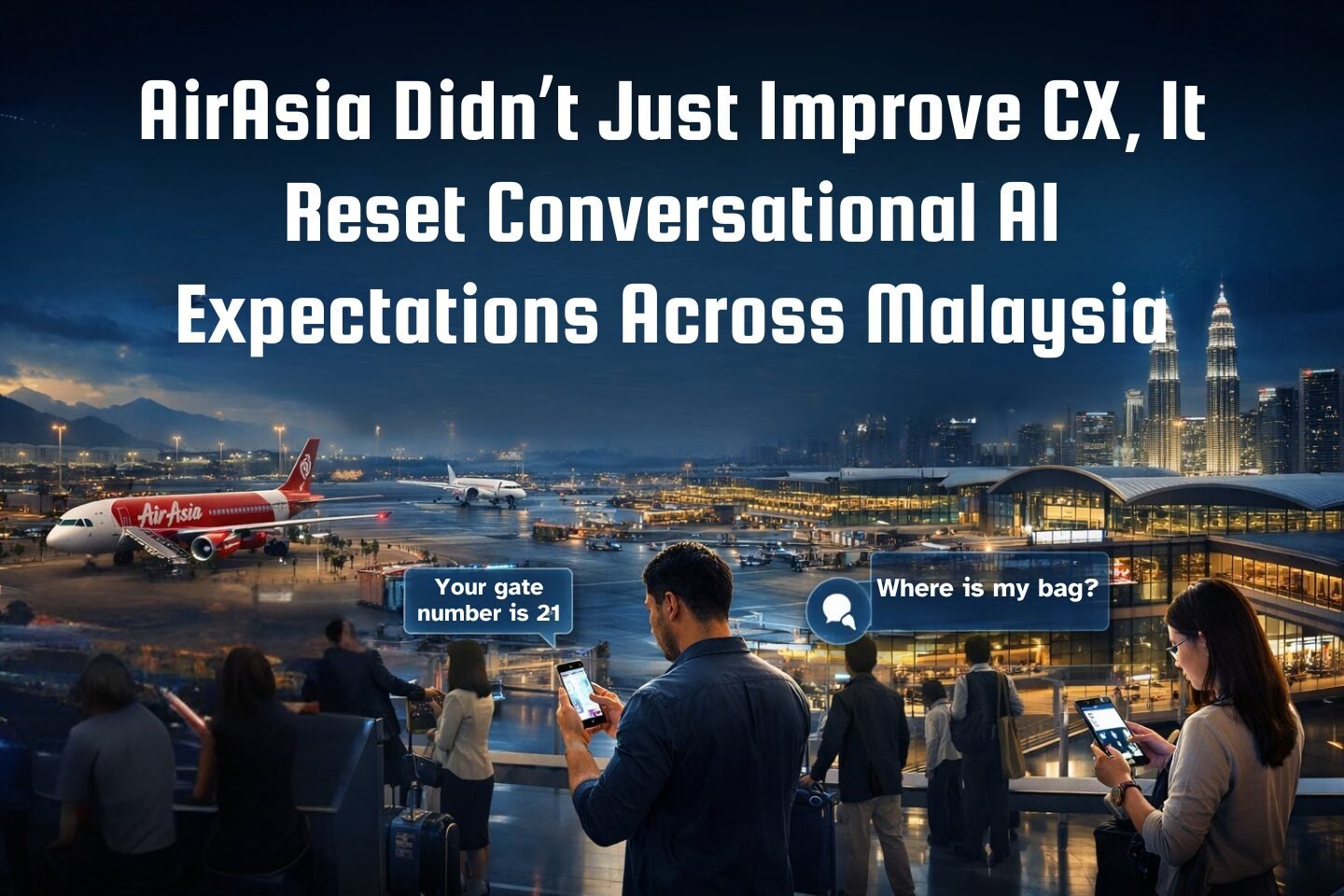
For many years, the improvement of customer experience in aviation focused on speed, pricing, and efficiency. However, in Malaysia, this airline changed a much bigger equation: how customers expect to interact with brands. This case study examines how AirAsia transformed Conversational AI in Malaysia and reshaped customer expectations at scale.
The AirAsia team not only optimized the touchpoints of its customer service but also set a new standard of what a modern-day “Conversational Experience” could be, driven by “Conversational AI,” designed for millions of customers across languages, touchpoints, and critical situations.
Today, Conversational AI in Malaysia is no longer experimental or “nice to have.” It’s becoming a baseline expectation, and AirAsia is the reason why.
How AirAsia Changed Conversational AI in Malaysia
The situation in Malaysian companies regarding conversational interfaces before the AirAsia transformation was mostly transactional. Chatbots replied to FAQ’s. Virtual assistants handled tickets. The experience often felt fragmented and mechanical.
However, AirAsia did things differently. They did not consider Conversational AI as just another support mechanism, but as an experience layer, one which could address the aspects of intent, context, emotion, and scale altogether. They incorporated the use of AI-powered conversations in the domain of booking, rebooking, refund, flight updates, and disruptions, thereby transforming the way customers experienced digital engagements.
The result not only provided faster resolutions but also offered a Conversational Experience that felt continuous and intuitive, especially when it came to stressful events such as delays or cancellations.
Why Conversational AI in Malaysia Looks Different After AirAsia
The significance of this paradigm shift is that it has a ripple effect. After experiencing a responsive and context-aware AI assistant with AirAsia, customers expected this experience wherever they went, whether it was banking, shopping, telecom, or even health services.
This is why conversational AI in Malaysia now carries higher stakes. Companies are no longer racing to see who can provide a chatbot, but rather who can make it seem most human. AirAsia set the bar higher by showing that Conversational AI can be scaled nationally without losing trust or clarity.
Designing a Conversational Experience That Customers Trust
The success of AirAsia was not solely the result of automation. It was the result of design discipline.
The airline concentrated on:
- Clear intent recognition across multilingual inputs
- Consistent tone across channels
- Seamless escalation from chatbot to human agents
- Real-time integration with operational systems
This enabled the Conversational Experience to shift from being a cost-savings layer to a trust-establishing layer. Customers were not asked to repeat themselves. They were not stuck in decision trees. They felt led, not processed.
This distinction is presently informing enterprise AI strategies in Malaysia.
From Airline Innovation to Enterprise Blueprint
AirAsia’s initiative has now become a model in its own right. Malaysian businesses across various industries are learning from AirAsia’s execution on how the power of Conversational AI can drive scale without losing empathy.
This is why, more and more, discussions about the Conversational AI Conference Asia involve real-world examples, rather than theoretical models. Leaders demand proof. They demand patterns that can succeed in complex, high-volume environments.
AirAsia provided this proof.
Why This Matters Beyond Customer Support
The deeper implications of what AirAsia has done lies in perception. It has shifted the Conversational AI from “automation” to “interaction.” From “efficiency” to “experience.
In doing so, it accelerated the maturity curve of Conversational AI in Malaysia, forcing enterprises to think beyond scripts and toward systems that learn, adapt, and respond in real time.
This is the new standard for digital engagement in Malaysia.
Conclusion: Where Conversational AI in Malaysia Is Heading
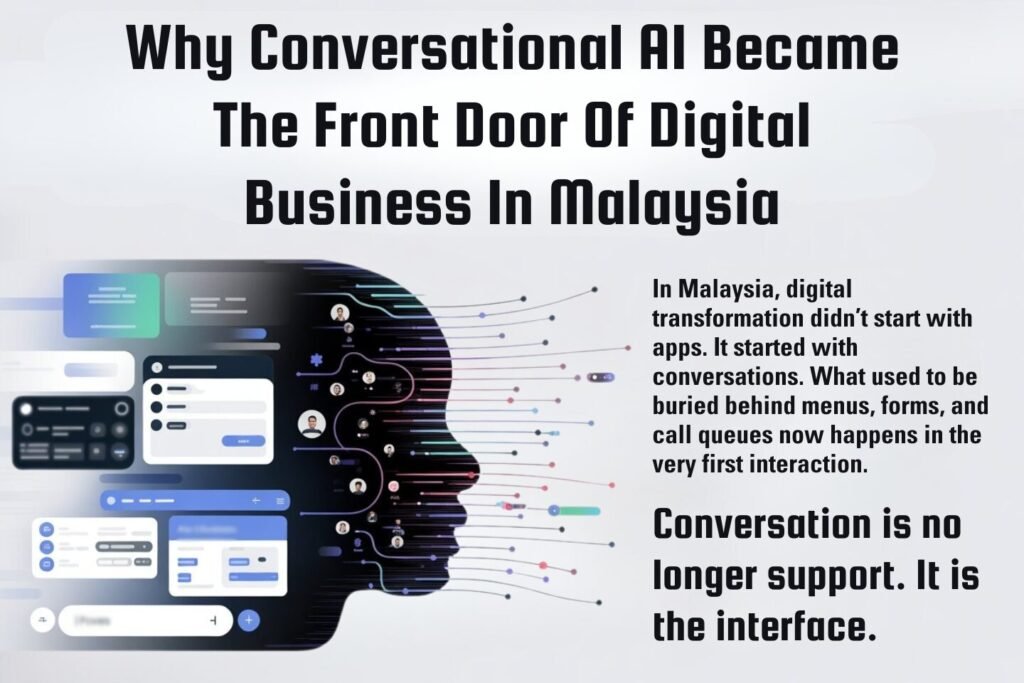
As enterprises gather at platforms like Conversational AI Conference Asia, one insight is becoming clear: conversational systems are no longer side projects. They are becoming the front door of digital business.
The AirAsia example shows what can be achieved when a company thinks of a Conversational AI solution as a strategic infrastructure and not something added on top. These brands are not only going to improve CX, but they’re going to redefine it.
FAQ's
Conversational AI emerged as the primary engagement layer, dealing with bookings, disruption, and customer inquiries at a mass scale.
Expectations increased due to their experience with excellent conversational interactions from brands such as AirAsia.
A Conversational Experience focuses on context, continuity, and trust rather than just task completion.
No. Conversational AI handled routine conversations while humans handled the complicated, high-value cases.
Aviation, banking, telecom, retail, and government services are adopting conversational ai fastest in Malaysia.
Conversational AI enhances customer trust by providing consistent, accurate, and timely responses without friction.
No, but scale is what makes it more valuable. Even smaller businesses can use it for specific purposes.
Intent accuracy, system integration, tone consistency and smooth escalation makes a successful conversational experience.
A more proactive, predictive, and deeply personalized generation of conversational AI systems, an evolution now being actively explored and debated by enterprise leaders at Conversational AI Conference Asia.